Mati produce station
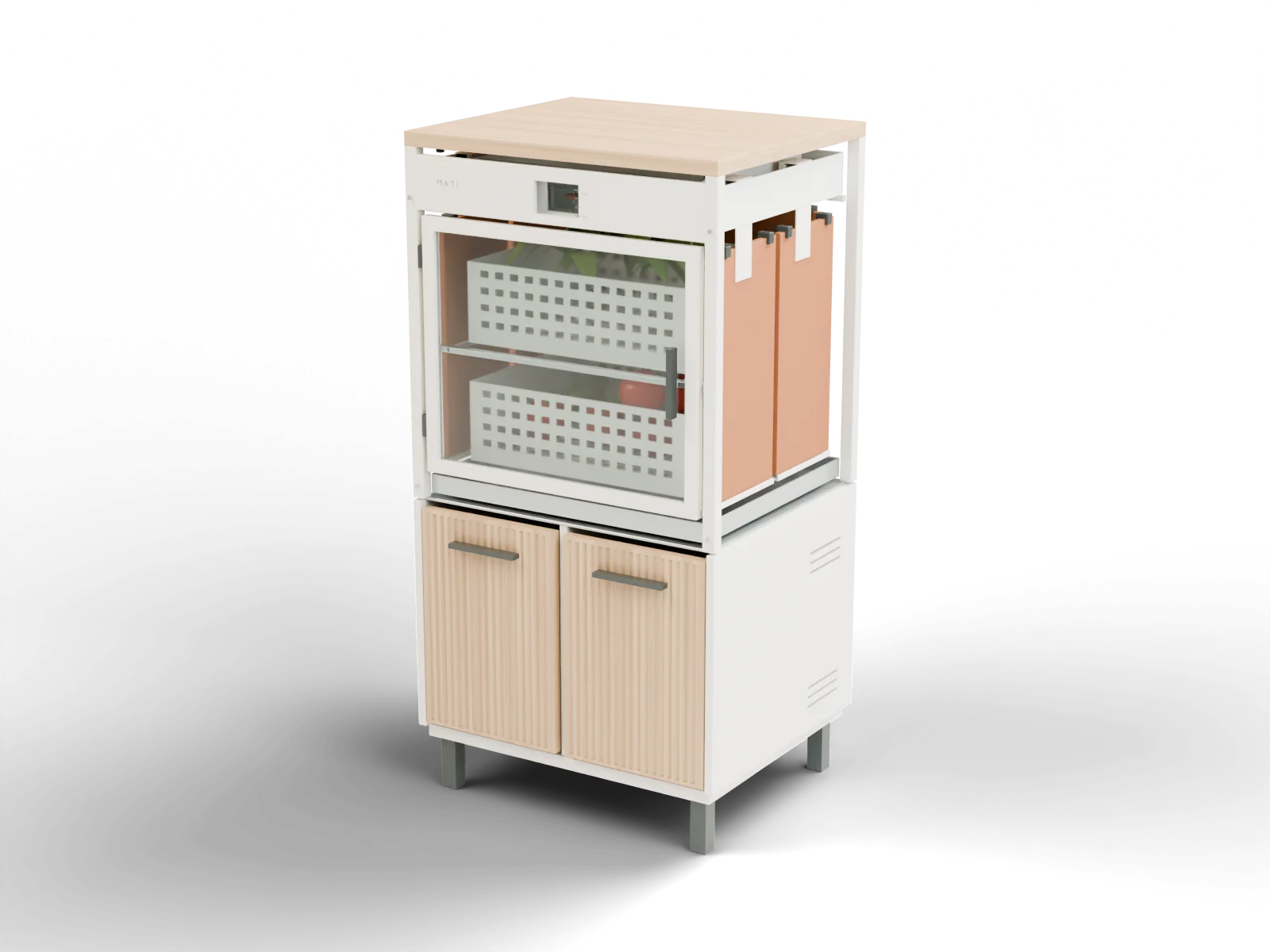
A floor-standing store for fruit and vegetables, cooled by water evaporating from terracotta, with no power.
The problem
Greens wilt on the counter, while onions and potatoes want somewhere dry and dark. Most kitchens give them a fridge shelf or a basket, and neither suits both.
The brief was a single piece of furniture with a cool, humid space for greens above and a dry, dark one below, without a plug.
- For
- Kitchens in hot, dry climates
- Size
- 480 W × 416 D × 940 H mm
- Materials
- Unglazed terracotta, off-white powder-coated steel, light-oak fronts
The idea
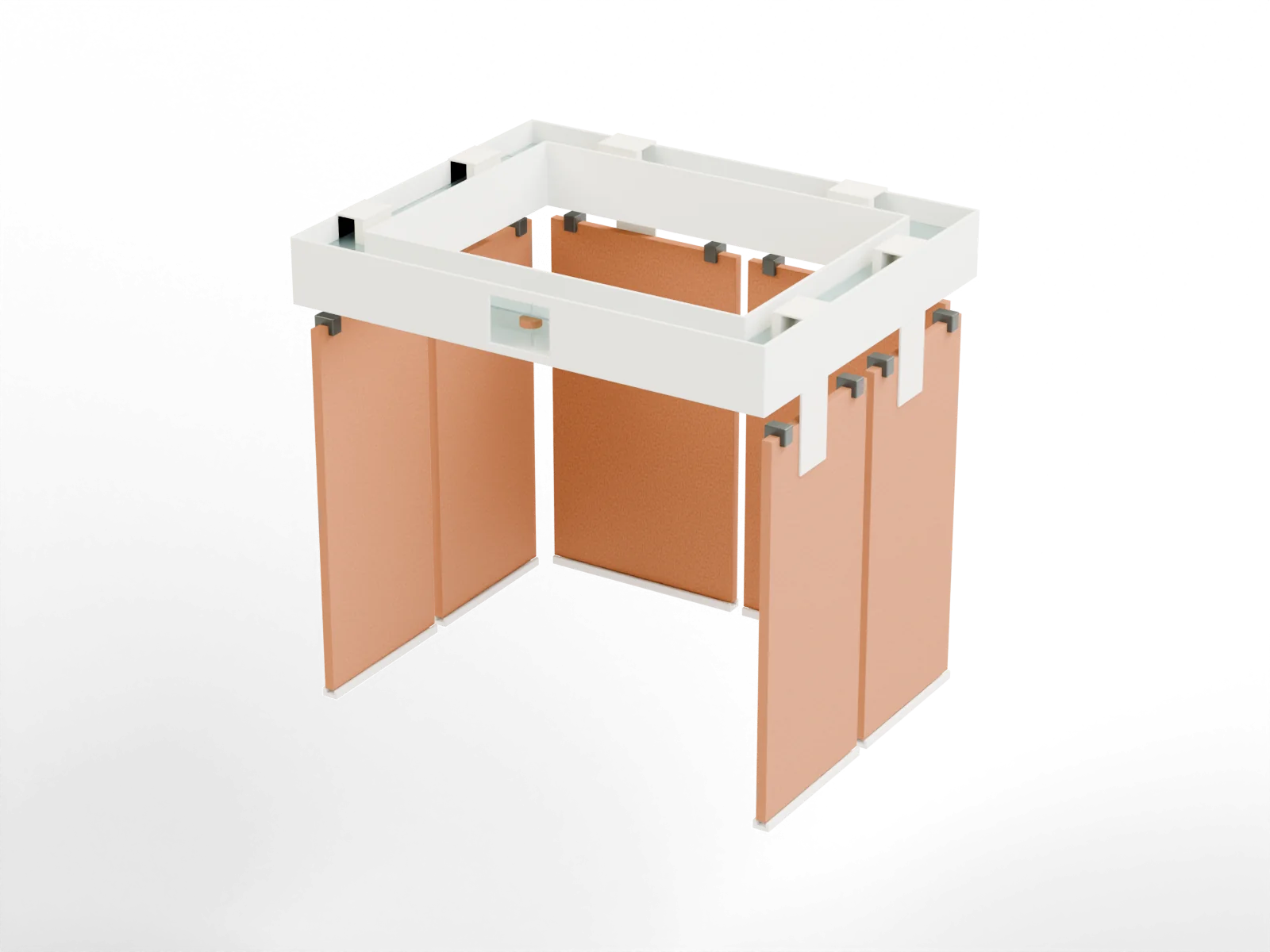
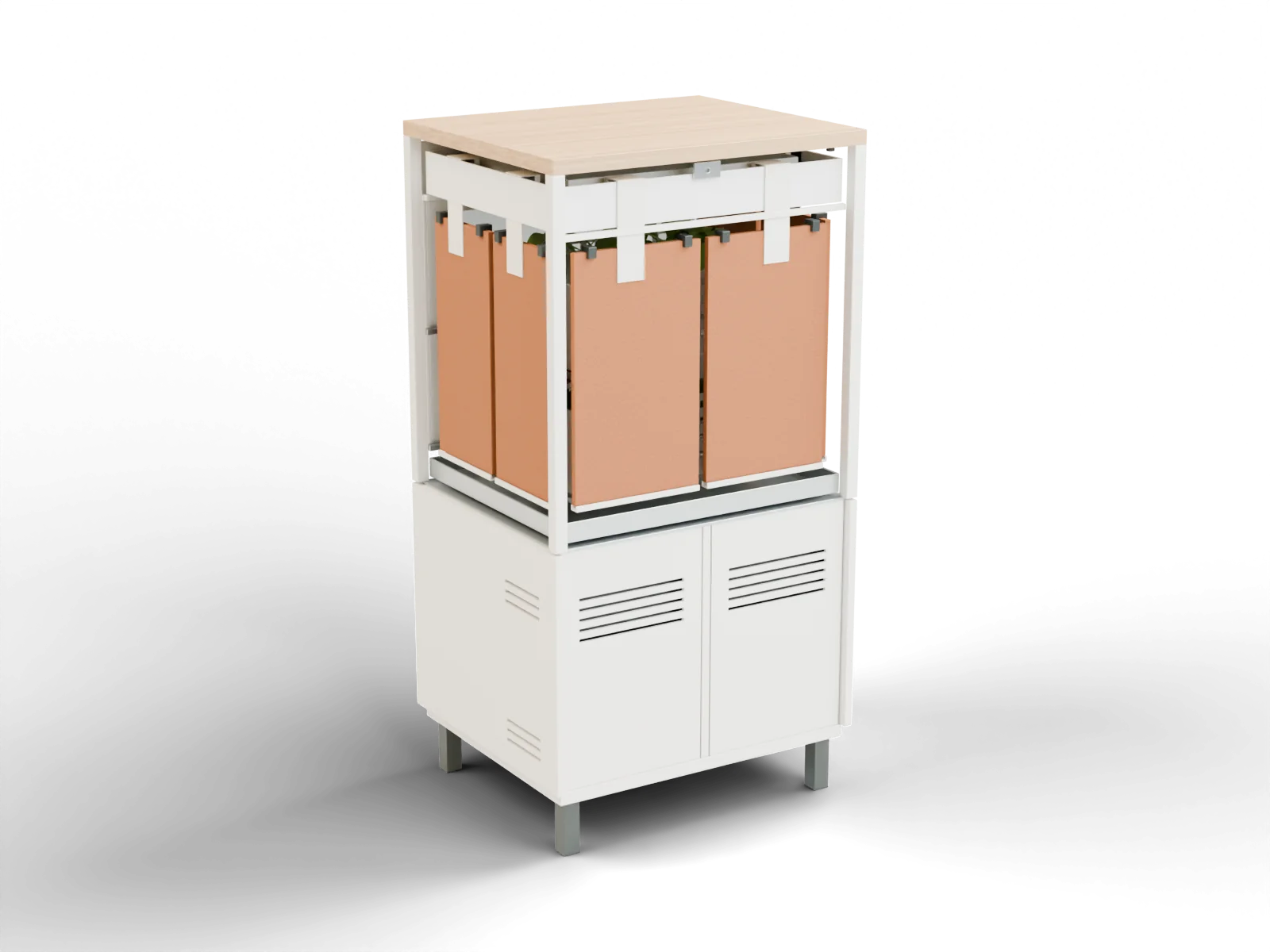
An old idea in a new body: water evaporating from unglazed clay cools the surface. A tank under the lid feeds textile wicks that keep six terracotta panels damp, and room air moving over the panels does the rest.
We were careful about what this can do. Evaporation cannot cool below the wet-bulb temperature, so it works in hot, dry air and very little in the monsoon.
Finding the form
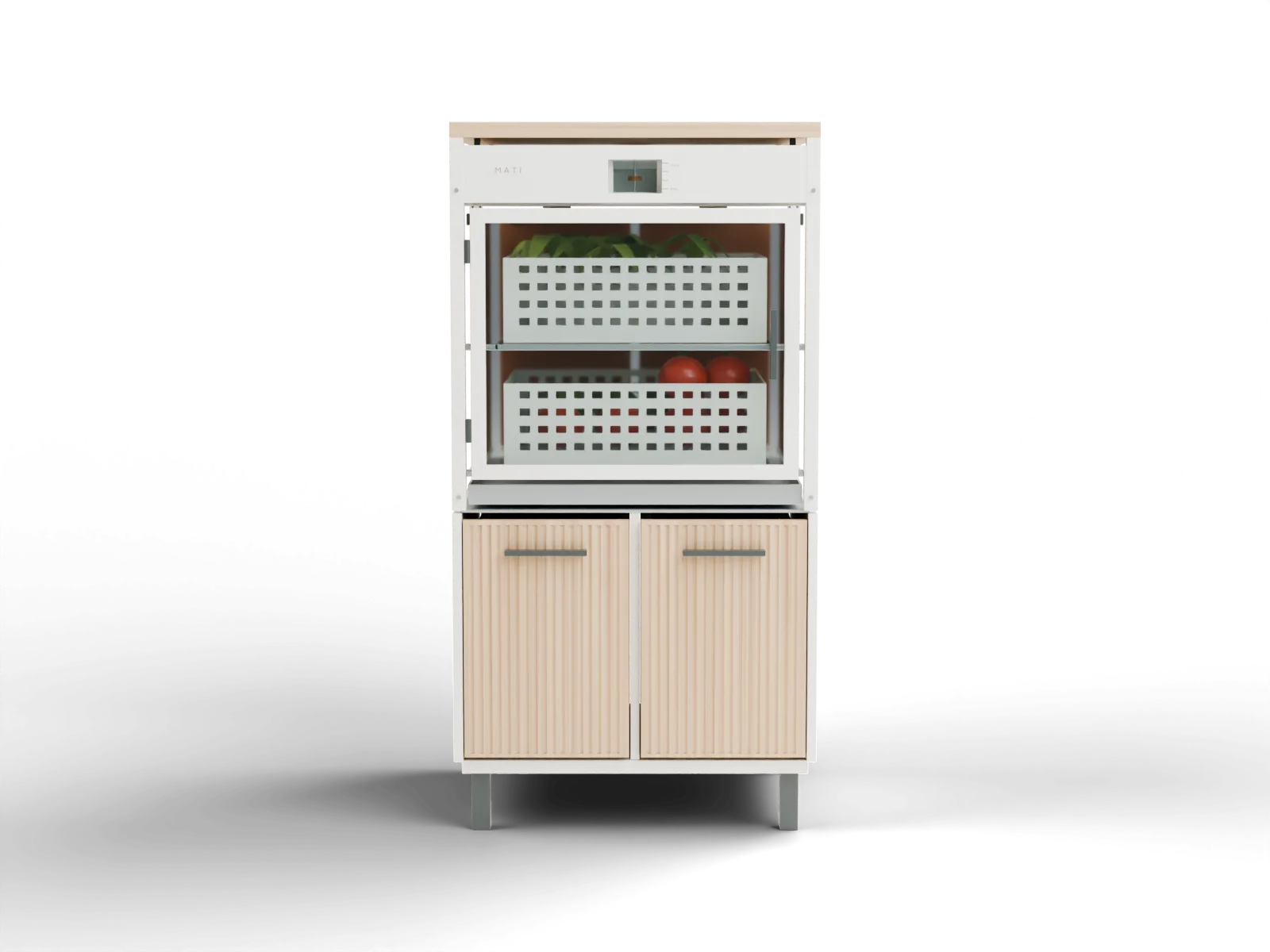
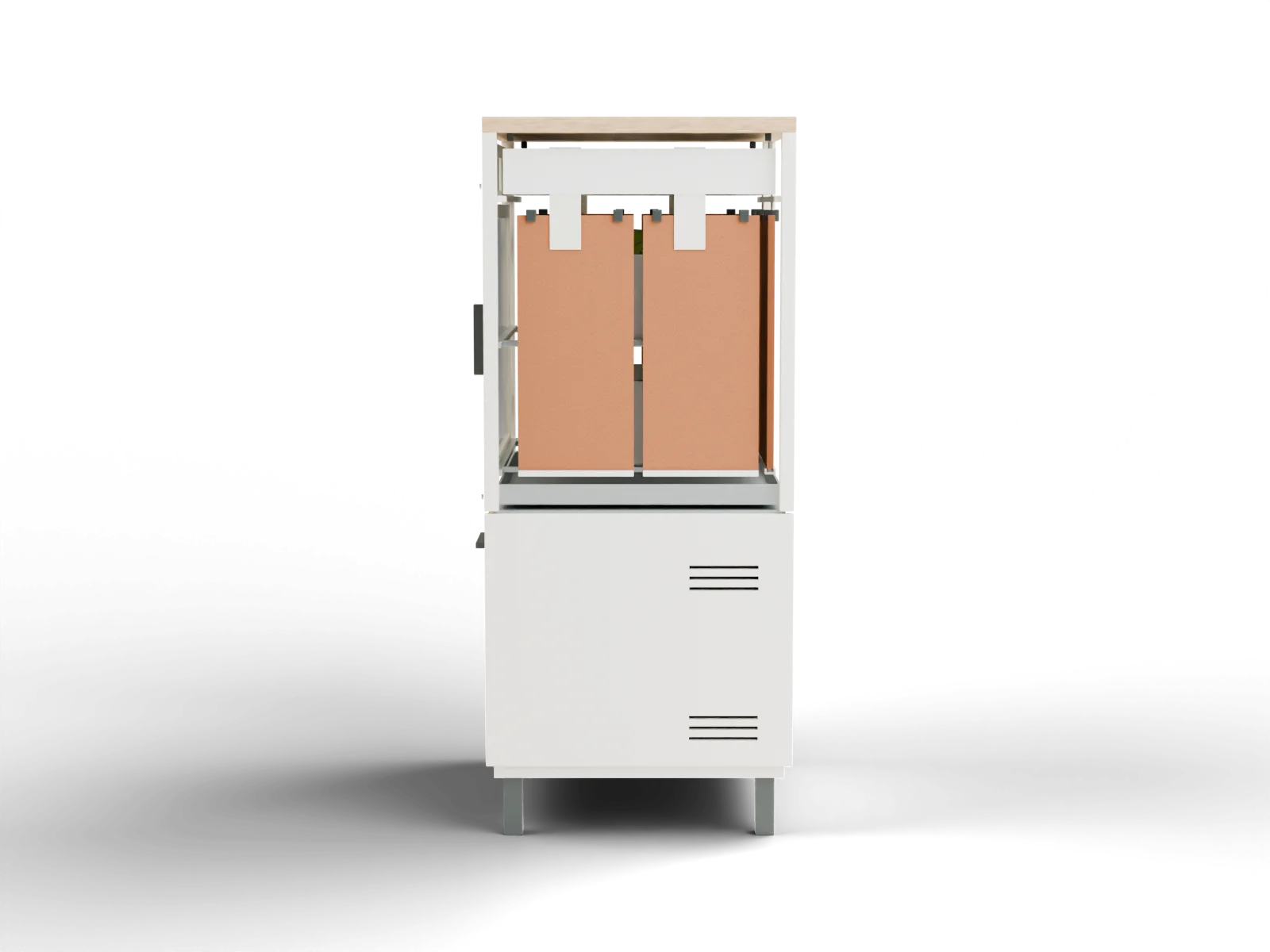
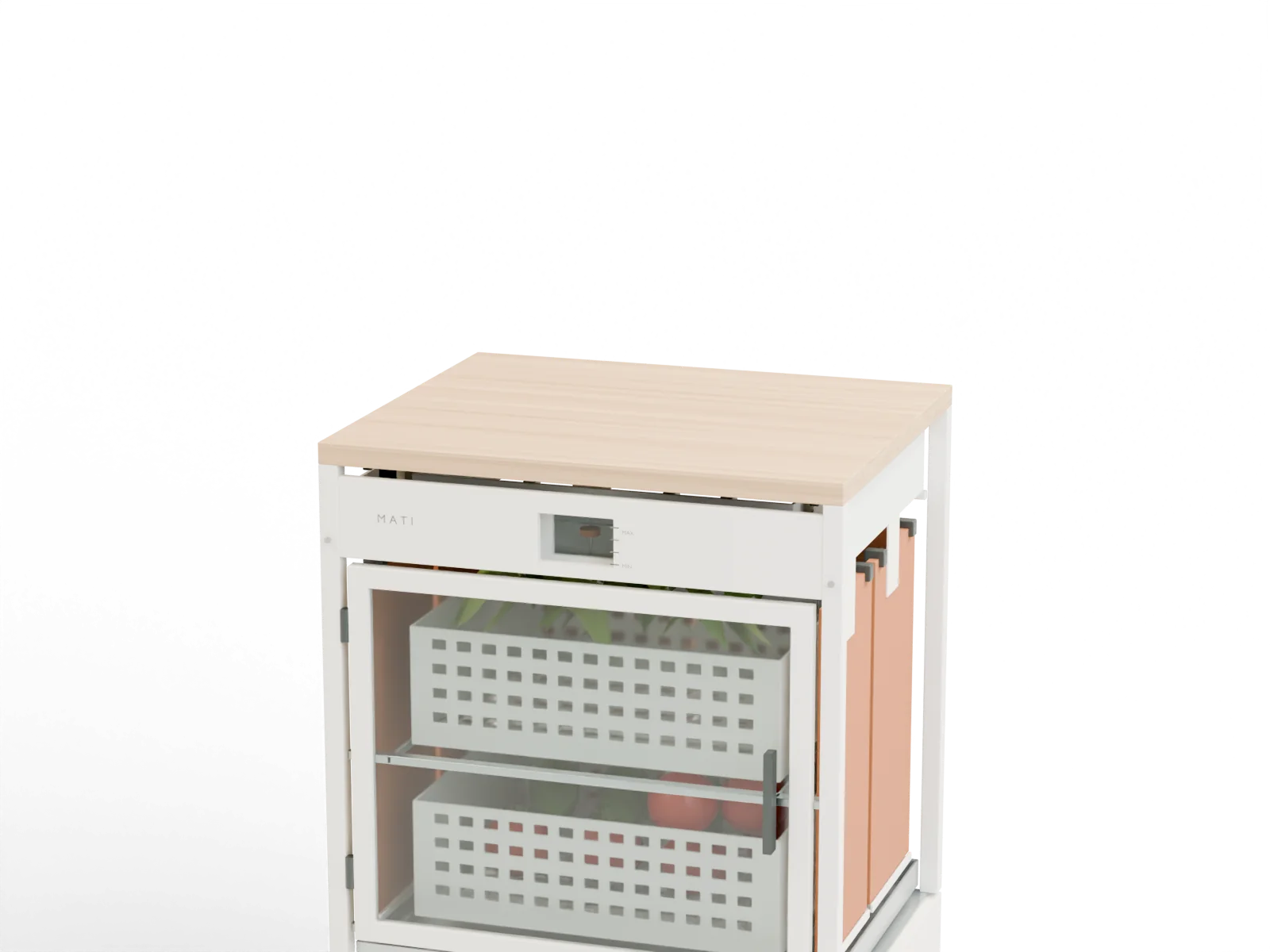
It had to belong with the drying cabinet, so it shares the oak, the off-white and the terracotta. A slim off-white frame carries a glazed upper door, with the clay panels left exposed on the sides and back where the air can reach them.
Below, two fluted oak doors close separate bins for onions and potatoes, each with its own air path and kept apart from the wet zone above.
Getting the details right
Everything that gets wet comes out. The top lifts off to refill a 2.2 litre tank with a float window for the level. A stainless drip pan slides out below the glass door, above a solid barrier that keeps drips out of the dry bins.
The clay tiles sit in padded cradles, with no screws through the ceramic, and lift out for cleaning or replacement.
The result
A 102-part assembly with editable tile dimensions and a concept brief covering use, service and manufacture. Wick and clay tests come next, then trials with real produce in hot-dry and humid weather.
Start with what you have.
A sketch, a reference, a rough idea. Let’s figure out the next step together.